
Gentlemen, baldness is not inevitable.
Published on · 3 min
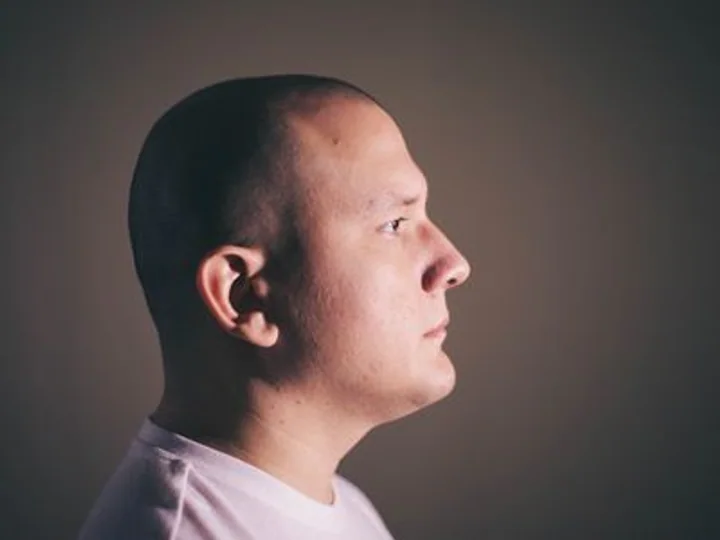
Baldness affects millions of men worldwide, but it is no longer synonymous with powerlessness against nature. Today, thanks to scientific and medical advances, we have a thorough understanding of hair mechanisms and concrete solutions to slow down, prevent, or even reverse certain forms of hair loss.
How to recognize the beginning of baldness?
Identifying the early signs of baldness is crucial for taking swift and effective action. Hair loss doesn't usually happen overnight, but develops gradually according to recognizable patterns.
The onset of baldness often manifests as progressive hair loss at the temples and the crown (vertex). These areas are particularly sensitive to androgen hormones and are the first areas affected in the majority of men.
- "M" shaped hair loss: Appearance of a symmetrical recession of the temples creating a characteristic "M" shape.
- Hair thinning: The sensation that the hair is becoming thinner, shorter, and less dense.
- Norwood-Hamilton scale: Medical classification into 7 stages allowing for precise assessment of the progression of baldness.
Androgenetic alopecia: the leading cause of baldness in men
Androgenetic alopecia is the most common form of male pattern baldness, accounting for 95% of hair loss cases in men. This chronic and progressive condition results from a complex interaction between genetic and hormonal factors.
Some hair follicles inherit a particular sensitivity to dihydrotestosterone (DHT), a potent androgen hormone. DHT, derived from testosterone by the action of the 5-alpha-reductase enzyme, binds to receptors in sensitive follicles and dramatically shortens the hair growth cycle.
The role of androgen hormones
Androgen hormones, and particularly DHT, play a central role in the development of male pattern baldness. Understanding this hormonal process helps identify the mechanisms of action of available treatments.
- Testosterone: A naturally occurring androgenic hormone, produced primarily by the testicles.
- 5-alpha-reductase: Enzyme that converts testosterone into DHT, a form 5 times more potent.
- DHT binding: DHT binds to androgen receptors in genetically sensitive follicles.
- Miniaturization: The affected follicles gradually shrink until they disappear completely.
Genetic factors: maternal heredity in the foreground
Baldness is primarily a matter of genetics. Contrary to popular belief, it is not solely passed down from father to son, but involves a complex genetic inheritance in which the maternal side plays a predominant role.
The genes that determine sensitivity to DHT are primarily located on the X chromosome, inherited from the mother. More than 200 genetic regions have been identified as influencing baldness.
- One third of men aged 30 already show signs of androgenetic alopecia.
- Nearly half of men aged 50 are affected by baldness to varying degrees.
- If your father and maternal grandfather are bald, your risk exceeds 80%.
What are the other causes of baldness?
Although androgenetic alopecia is the predominant cause, other factors can trigger or worsen hair loss. Unlike hormonal baldness, some of these causes are reversible.
- Chronic stress: Prolonged stress triggers a condition called telogen effluvium, causing diffuse and often dramatic hair loss.
- Nutritional deficiencies: Hair requires a constant supply of iron, zinc, B vitamins and biotin.
- Iatrogenic drugs: Some treatments can cause hair loss as a side effect.
- Dermatological diseases and disorders: Fungal infections, autoimmune diseases, traction alopecia.
How to slow down or prevent baldness?
Prevention remains the best strategy against baldness. Adopting simple actions and healthy daily habits can significantly slow the progression of hair loss.
- Suitable hair care: Gentle shampoos without sulfates, formulas enriched with caffeine or saw palmetto.
- Scalp stimulation: Regular massages to stimulate blood microcirculation.
- Optimal nutrition: Balanced diet rich in protein, iron, zinc and B vitamins.
- Stress management: Regular physical exercise, quality sleep, relaxation techniques.
Medical and aesthetic solutions
When prevention is no longer sufficient or baldness is already established, proven medical and technical solutions can slow down, stabilize, or even partially reverse hair loss.
- Minoxidil (topical treatment): Vasodilator that stimulates follicular blood circulation, prolongs the anagen phase.
- Finasteride (oral treatment): 5-alpha-reductase enzyme inhibitor, reduces DHT levels by 60-70%.
- Mesotherapy and PRP: Local injections of vitamins or platelet-rich plasma.
- FUE/DHI hair transplant: A definitive solution for advanced baldness.